Paintless Dent Repair: The Homeowner’s Guide to Quick, Lasting Results
Life happens fast. One minute, your car is gleaming in the driveway. The next? A rogue shopping cart or a surprise hailstorm leaves an unsightly dent. If you’re a homeowner who values your investment—and your time—knowing what to do next is half the battle.
At Autobody Medics, we understand the frustration of seeing your vehicle’s smooth finish marred by dents or dings. Our certified technicians have helped countless families restore their cars quickly, safely, and without unnecessary hassle.
What Is Paintless Dent Repair (PDR)? 🛠️
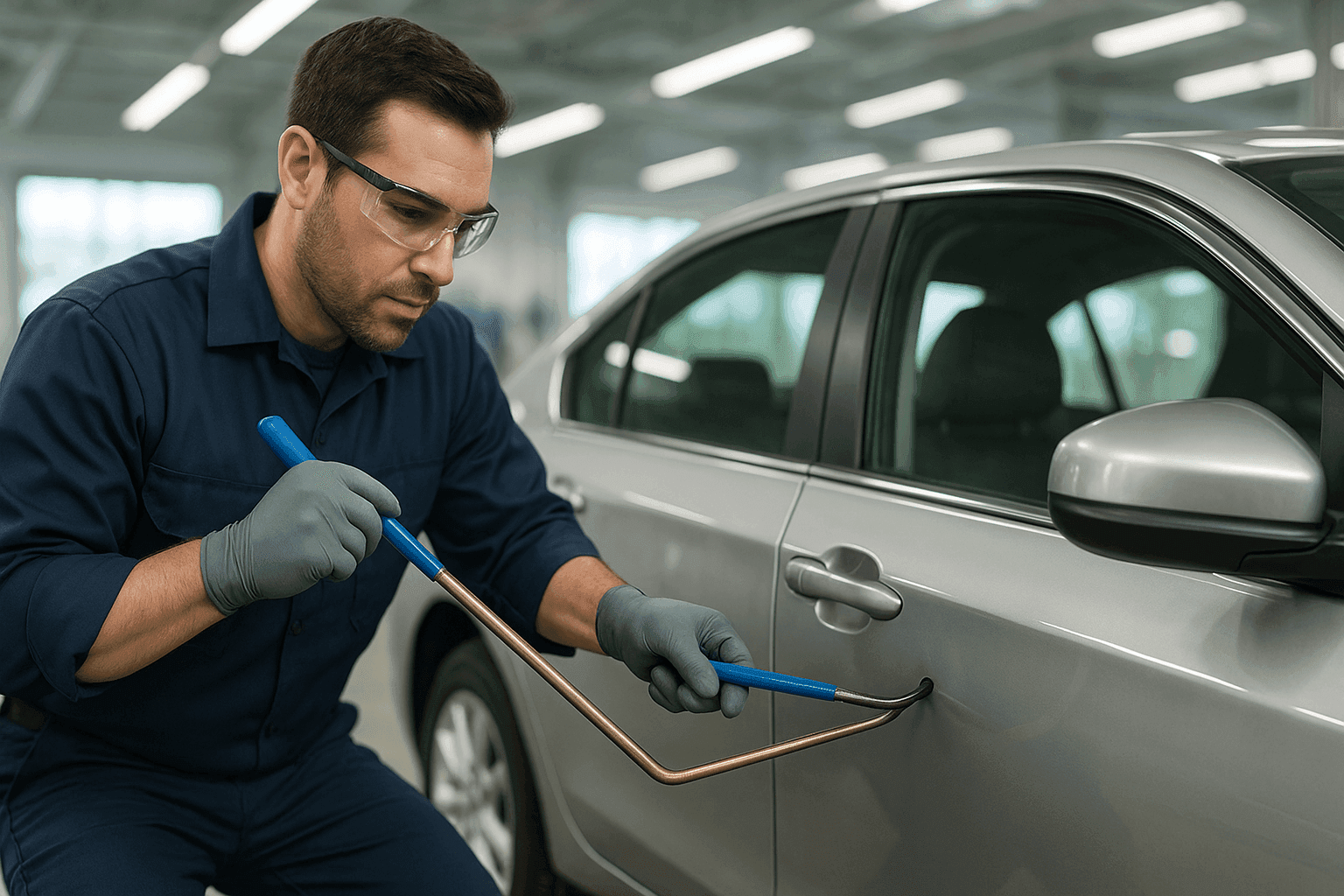
Paintless Dent Repair, or PDR, is exactly what it sounds like: a method for removing minor dents from your car’s body without disturbing the original paint. Unlike traditional auto_body repair—which often involves sanding, filler, and repainting—PDR works by skillfully massaging the metal back into shape from behind the panel.
Think of PDR as a gentle chiropractor for your car. Instead of covering up the issue, it realigns the metal, preserving the factory finish. No mismatched paint. No sanding. And no waiting days for paint to cure.
Key differences from traditional body work:
- No paint or fillers: PDR keeps your car’s original finish intact.
- Faster turnaround: Most repairs take just a few hours.
- Less invasive: No harsh chemicals, sanding, or blending paint.
This approach is recognized and endorsed by industry groups like I-CAR and the National Institute for Automotive Service Excellence (ASE) for appropriate dents—and it’s become the gold standard for quick, lasting results.
When Should Homeowners Choose PDR?
Not every dent needs a full-blown makeover. PDR is ideal for:
- Hail damage: Tiny craters on your roof or hood.
- Door dings: Parking lot mishaps from neighboring cars.
- Minor collisions: When the paint isn’t cracked or chipped.
- Shopping cart bumps: Those frustrating marks that appear out of nowhere.
PDR works best for:
- Dents where the paint is still intact.
- Shallow or moderate depressions, typically up to the size of a baseball.
- Areas with easy access behind the panel.
Signs you need a pro:
- The dent is on a body line or near the panel’s edge.
- Paint is cracked, flaking, or missing.
- You can’t reach behind the area safely.
- The dent is deep, sharp, or creased.
If you’re unsure, it’s always safer to call a certified auto_body specialist—like our team at Autobody Medics—for a quick evaluation.
Pros and Cons: PDR vs. Traditional Methods
PDR Advantages:
- Lower cost: No materials like paint or filler, so you pay less for labor.
- Faster service: Many jobs completed same-day.
- Original paint preserved: No risk of color mismatch or overspray.
- Better for resale: Factory finish means higher value.
PDR Considerations:
- Not for all damage: Severe dents, deep creases, or paint damage still require traditional methods.
- Some panels inaccessible: Tight spots or reinforced areas may need standard repair.
DIY vs. Professional: Risks & Rewards
You’ve probably seen “DIY dent puller” kits at your local auto store. For tiny, shallow dents in accessible spots, these may offer a temporary fix—think of it as putting a band-aid on a bruise. But without the right tools and training, it’s easy to stretch the metal, crack the paint, or even make the problem worse.
When DIY might work:
- The dent is very shallow with no paint damage.
- It’s in a flat area you can easily reach from behind.
When to hire a pro:
- The dent is on a curve, body line, or hard-to-reach spot.
- There’s any risk of damaging airbags, sensors, or wiring.
- You want to keep your warranty or insurance coverage intact.
Autobody Medics uses industry-approved tools and follows I-CAR and ASE standards, ensuring your vehicle is safely restored—without surprises.
Quick Safety Checklist
- Check for sharp edges: Avoid injury or making the dent worse.
- Inspect for paint damage: Cracked or missing paint means PDR won’t solve it alone.
- Look for hidden damage: Bumpers, sensors, or internal components may need a pro’s eye.
- Never force panels: Modern cars have complex structures—forcing metal can affect safety systems.
What the Pros Do on Arrival
When you call an auto_body specialist for PDR, here’s what happens:
- Damage Assessment: Careful inspection under special lights to spot every imperfection.
- Access Planning: Deciding the best approach—sometimes removing trim or panels for access.
- Precise Massaging: Using specialized tools to gently reshape the metal from behind.
- Quality Check: Ensuring the panel looks as good as new, with no ripples or paint issues.
- Warranty Review: Explaining what’s covered and how to maintain your repair.
Certified technicians at Autobody Medics are trained to spot hidden issues and guarantee your safety and satisfaction.
Prevention & Maintenance Tips
Protecting your vehicle from future dents isn’t just luck—it’s about habits:
- Park smart: Choose end spots or park away from high-traffic areas.
- Use garages or covers: Especially during hail season.
- Install side molding: Adds a buffer against swinging doors.
- Keep up with maintenance: Address small dings early to prevent rust or bigger repairs.
Costs & Time Factors
Every dent is different, but here’s what you can expect:
- PDR is typically less expensive than traditional body work, since there’s no need for paint or filler.
- Most PDR jobs take a few hours—perfect for busy homeowners.
- Severe dents may require more time or traditional repair methods, which can take days.
For insurance claims, many providers cover PDR if the damage is from hail or a covered event. Always consult your policy or ask our team for assistance with the paperwork.
When It’s an Emergency
Some dents are just cosmetic, but there are times to act fast:
- Dents near airbags or sensors: Can affect safety systems.
- Dents that break the paint: Exposed metal can rust quickly, especially in wet climates.
- Damage after a collision: May hide structural issues.
If you’re unsure, don’t wait. Your safety—and your car’s value—are worth a quick check by certified pros.
FAQ: Paintless Dent Repair for Homeowners
Q: Will PDR remove all types of dents?
A: PDR is best for minor dents with intact paint. Deep creases or chips may need traditional repair.
Q: Will the dent come back after PDR?
A: No. Proper PDR realigns the metal permanently—no “pop-back” unless there’s new damage.
Q: Does PDR affect my car’s warranty or insurance?
A: Certified PDR using industry-standard methods preserves your factory warranty. Many insurance policies cover PDR for qualifying damage.
Q: Can I combine PDR with other services?
A: Absolutely. Many homeowners pair PDR with detailing, windshield repair, or tire services near you for a complete refresh.
Local and Seasonal Considerations 🌧️
Climate and location matter. In hail-prone regions, spring and summer storms can mean a sudden spike in dent repairs. Parking under cover and being proactive helps. Winters with icy roads? More slip-and-bump fender dents. Wherever you live, quick attention to even minor dings can prevent rust, reduce repair time, and keep your car looking sharp.
For more, check resources from the National Highway Traffic Safety Administration (NHTSA) and your local Department of Transportation for vehicle safety guidelines.
If a dent is leaving you frustrated—or you just want peace of mind—reach out to the certified team at Autobody Medics. We’re here to help you restore your car’s look and value, fast.
Call Autobody Medics now — or reach us anytime at 888-448-9925 .